


Psoriasis is a chronic, non-infectious, inflammatory skin lesion with a negative impact on the quality of life of patients (“Psora” from Greek - scales).It was from there, like many other diseases, that the first observations about psoriasis were described.This term was introduced by Galen, one of the key researchers in medicine.
Skin signs of psoriasis created confusion among people and doctors, since leprosy was widespread at that time, which led to serious consequences.Patients with psoriasis were subjected to social pressure, they were avoided, and forcibly isolated.In Europe, such people were forced to warn others of their arrival by ringing bells.Treatment attempts included the use of manure, onions, sea salt, oil, urine, but everything was ineffective and made psoriasis patients outcasts.
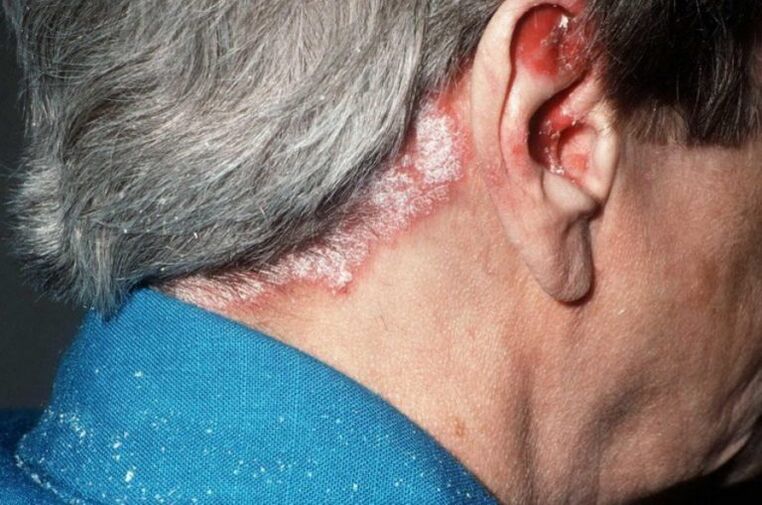
PREVALENCE OF PSORIASIS
The disease can appear at any age, but most often occurs in the age group from 49 to 69 years.The reported prevalence of psoriasis in countries ranges between 0.09% and 11.4%, making psoriasis a serious global problem.
Despite the widespread misconception that psoriasis is not as serious a disease as other non-dermatological pathologies, psoriasis creates a disease burden that extends well beyond dermatological symptoms.Its psychological effects are similar to cancer, heart disease, and diabetes.Psoriasis plaques are often visible, which can negatively impact interpersonal relationships, school or work performance.Not surprisingly, people with psoriasis have higher rates of depression with an increased incidence of suicidal ideation.
Patients with psoriasis are also at risk of developing serious comorbidities that make the disease more difficult to control and increase the risk of early death.Cardiovascular disease and metabolic syndrome are more common in patients with psoriasis.
In addition, psoriasis itself is a risk factor for cardiovascular diseases, increasing the relative risk of myocardial infarction by 3 times.Severe psoriasis is also associated with an increased risk of mortality, resulting in a 3.5 and 4.4 year reduction in life expectancy for men and women, respectively, compared with people without psoriasis.
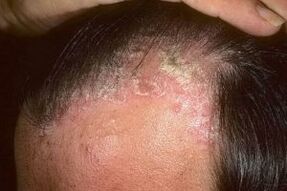
CAUSE OF PSORIASIS ON THE HEAD
There have been many theories about the origin of psoriasis.This includes the influence of microbes, viruses, allergies, poor hygiene, impaired blood supply to the skin, disruption of the functional balance of internal organs, and one of the most relevant at the moment is the autoimmune nature of the disease, when human immune cells attack their own tissues.And even this assumption remains a theory, since so far no antibodies that damage the skin have been found in patients with psoriasis.
At the moment, the cause of the pathology remains unknown.But in the course of research, scientists have identified factors that, with a certain degree of probability, can provoke psoriasis.
The following points are highlighted:
- Heredity.There is not a hundred percent chance that even if the mother and father are sick, their child will definitely suffer from psoriasis.But in such a situation, the risk of getting such a pathology is higher.It was also noted that if among identical twins one is sick, the other twin has a higher chance of getting sick than compared to the normal risk in the population.This proves that this nosology has a genetic basis.
- Skin damage: accidental knife cuts, cat scratches, mosquito bites, sunburn increase the risk of triggering another outbreak.
- Infections: Staphylococcal, streptococcal and other infections can also act as a trigger.Children often have streptococcal tonsillitis before the onset of skin manifestations of psoriasis.
- There are medications that can trigger the disease, for example, anti-malaria medications, some anti-depression medications.
- A change in HIV status to positive can also give impetus to the development of psoriasis.Therefore, an HIV test if psoriasis is suspected is not strange.
- Stress.The most famous trigger for non-specialists.“It’s all because of stress” - every psoriasis patient has heard this phrase at least once.Some people are dubious about this phrase, but it has its own justification.Scientists believe that our immune system can respond to emotional and mental pressure in the same way as it does to physical defects such as injury and infection.
- Excess weight negatively affects the entire body systemically, and if an obese person has a history of psoriasis, treatment is more difficult and often less effective.
- Smoking.It has long been noted and it is no secret that cigarettes negatively affect the condition of the skin.Hence the likelihood of provoking psoriasis, especially the head and hands are damaged.
- Alcohol is one of the common individual triggers for psoriasis.
- Hormonal changes.The disease often appears during puberty.Menopause can also trigger psoriasis, but during pregnancy a decrease or even complete regression of plaques is noticed.
SYMPTOMS OF PSORIASIS ON THE HEAD
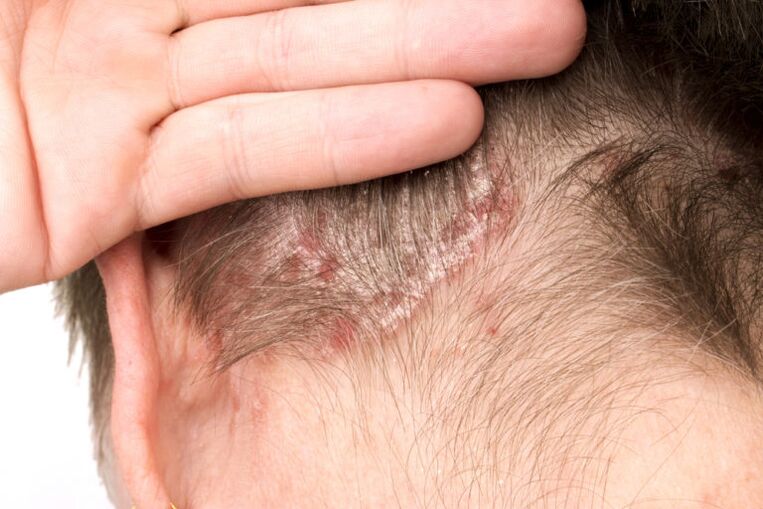
In 50% of cases, psoriasis makes itself felt from the scalp.Psoriasis can appear anywhere on the scalp.Sometimes small plaques develop that are easy to hide in the hair, but when the entire scalp is covered, hiding the plaques is quite problematic.
The appearance of psoriasis on the head will manifest itself as follows:
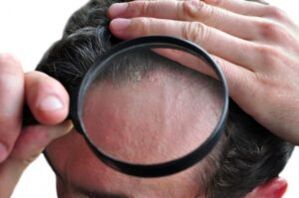
- Reddish spots on the scalp.Some spots may be barely noticeable due to their fading, but there are also bright red elements that are easy to notice.
- Scales peeling off from psoriatic skin.The condition of the scalp with this pathology may resemble ordinary dandruff.But there are differences, for example, with psoriasis, a silvery sheen is observed, and may also be accompanied by itchy skin.
- Dry scalp.The scalp can be so dry that the skin will crack and bleed, which will create conditions for infection, the treatment of which in such a localization has certain difficulties.
- Itching.This is one of the most common symptoms.Some experience mild itching, which the patient may forget about in everyday activities, and some experience such severe itching that work, study, and even sleep are impossible.
- Bleeding.Because scalp psoriasis can be itchy, the patient may scratch the skin, damaging it.In addition to bleeding, scratching can worsen psoriasis by making the plaques larger and denser.That's why dermatologists tell their patients, "Try not to injure the scalp."
- Burning.The patient may describe their scalp as literally “on fire.”
- Hair loss.Scratching the head and using force to remove scales can lead to hair loss.Although this phenomenon is temporary, it can still cause inconvenience to the patient.
These clinical manifestations can quickly wax and wane.This is an individual process.In one patient, the entire pathological process will end in one pale plaque under the hair, while in another there will be many bright lesions throughout the head.This is influenced, among other things, by the triggers described above.
A number of problems that the patient may encounter:
- Skin manifestations visible to others.Living with psoriasis can make a person self-conscious.Any aspect of social life can cause stress for these people, such as holding hands on a date.
- Finance.Treatment for psoriasis can be expensive.This applies to a greater extent to widespread psoriasis, resistant to conventional therapy, for the treatment of which new drugs based on monoclonal antibodies are used.
- Pain.Psoriasis can cause chronic pain, which further increases stress levels.This will be especially true when skin manifestations are combined with inflammation of the joints, thereby reducing a person’s daily activity.
- Treatment.Especially when the patient seeks help late, some procedures do not have the expected effect, which, of course, worries the patient, depressing him emotionally.Other procedures can take quite a long time.For example, you may need to receive phototherapy 3 times a week for up to a year.For some, such a regime will be difficult to compatible with the standard rhythm of life.
- Living with a chronic illness.Psoriasis, like many other chronic pathologies, requires great willpower.It is difficult for the patient, especially in the initial stages, to cope with a number of additional problems that have fallen on his head.This creates conditions for depression to occur.
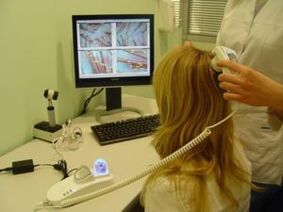
DIAGNOSIS OF PSORIASIS ON THE HEAD
The patient can decide whether to see a doctor or not depending on the severity of the symptoms.However, the best solution, regardless of the location of the plaques, is to see a doctor.In order for further treatment to be as successful as possible, it is necessary to make an accurate diagnosis, even if the symptoms are mild.
In most cases, scalp psoriasis is diagnosed after a physical examination and medical history.
A dermatologist is able to determine scalp psoriasis by examining pathological elements of the skin. In exceptional cases, the patient may be recommended to undergo a skin biopsy to exclude other diseases.
TREATMENT OF PSORIASIS ON THE HEAD
Unfortunately, at the moment there is no medicine that would cure this disease.Therapy is required throughout life and is aimed at maintaining remission.In addition, caring for patients with psoriasis requires not only treating the skin, but it is also very important to control existing chronic diseases and prevent the emergence of new ones.
Such conditions will include cardiovascular, metabolic diseases, as well as the maintenance of psychological health.
Treatment goals:
- To achieve clinical recovery of the patient as soon as possible;
- Remission must be stable and long-term;
- Maintaining a positive psychological status of the patient.
DIETARY NUTRITION
Treatment traditionally begins with diet.Foods containing antioxidants such as vitamin C, E, beta-carotene (vegetables, fruits, sage, ginger and others) can play a positive role, as well as omega-3 fatty acids, which are rich in salmon, sardines and other fish.
The link between alcohol and psoriasis is unclear, but experts say that drinkers respond less well to treatment and have longer psoriasis remissions after quitting alcohol.In addition, some antipsoriatic drugs are not compatible with alcohol.
A clearer correlation is observed with excess weight.In obese people, as a rule, the pathology progresses faster with a more vivid clinical picture.
SHAMPOOS
Hair makes treating scalp psoriasis particularly challenging.Few people will agree to remove hair in order to more effectively resolve the clinical manifestations of the disease, especially considering the fact that the defects will be even more noticeable to others.
Conventional hair care products are not suitable in this situation, as they can further irritate the scalp, contributing to the progression of the pathology.Therefore, tar shampoos are used, the effectiveness of which in the fight against scalp psoriasis has been noticed for a long time.
Tar has a “calming” effect on the epidermis of the scalp, suppressing the formation of scales.In addition, shampoos with phenolic acid are used, as it has a keratolytic effect (destroys dense horny scales).Plus is used to enhance the penetration of other drugs, including corticosteroids.
When prescribing shampoo, the individual characteristics of a person’s hair hygiene are taken into account.For example, some women do not wash their hair every day, so it would be optimal for them to apply the solution to their hair before bed 2-3 times a week, followed by washing their hair in the morning.
PHENOLIC ACID
Phenolic acid can also be used separately as an ointment.The fact that the ointment is applied for a relatively long time increases its effectiveness of the hyperkeratotic property.And for patients who complain of difficulty in removing flakes from their hair, applying ointment before showering can help resolve this situation.

COAL RESIN
Coal tar has been used as a treatment for psoriasis for several decades due to its antiproliferative, anti-inflammatory, as well as potent antipruritic effects.
Although, raw coal tar is the most effective tar.Applying raw rock tar to the scalp is problematic.Generally, it is recommended to use a resin solution (5-20%) formulated as a lotion or added to a corticosteroid medication.This remedy helps fight psoriasis, but has a number of side effects: coloring, hair thinning and a more serious negative effect - carcinogenic, which limits the use of this method.
For example, for this reason, the use of coal tar is prohibited in Canada and the European Union.
CORTICOSTEROIDS
Of all the topical treatments available, corticosteroids have shown the greatest effectiveness in clinical trials in treating scalp psoriasis and are the most commonly prescribed treatment.Corticosteroids are also convenient because there are a large number of forms of production for any situation: creams, lotions, ointments, oils, gels, foams, solutions, sprays and shampoos.
Do not underestimate the importance of psychological harmony in this pathology.Stress can either become a trigger that causes a detailed clinical picture, or slow down the treatment process.Therefore, patients with internal anxiety are recommended to consult a psychotherapist or psychologist.
CARE RECOMMENDATIONS FOR SCALP PSORIASIS
For a patient with psoriasis, first of all, it is important to follow the doctor’s advice, but, nevertheless, by following the simple rules that will be described below, you can further improve your quality of life:
- Use moisturizing lotions.Skin manifestations of the disease noticeably worsen when the skin is dry, so it is important to keep the skin moist.Specialized cosmetic ointments, lotions or, for example, regular Vaseline can help with this.
- Treat skin with psoriatic plaques with care.When you wash your hair, never forcibly rip off the scales that are tightly adjacent to the skin, as you can only spread the process to nearby, healthy tissue.
- Be careful when cutting your nails.Cases have been described where accidental damage to the growth zone of the nail with nail scissors provoked the appearance of new cutaneous elements.
- Find a suitable shampoo for yourself that does not cause flaking of the skin to use on your scalp during the period of remission.Or continue to use tar, only with a lower concentration, for everyday care.
- Climate can also play a role.It has been noticed that cold has a negative effect on patients, provoking the development of plaques.Sunny weather provokes regression of skin manifestations, but not always.
- Use a humidifier.This can keep the skin moist and eliminate the "dry" air that affects psoriasis patients.
- Do not take medications that may harm your skin.You should tell your doctor about all the medications you are taking, even those that you think are harmless.For example, drugs containing lithium salts, which are contraindicated for patients with psoriasis, can be used to treat depressive conditions.
- Avoid all kinds of damage to the skin: scratches, cuts, impacts.Trauma to the skin can cause a condition called Koebner phenomenon (where psoriatic elements appear along the line of skin injury).Be careful when shaving.Try to avoid acupuncture, avoid getting tattoos on your body, and do everything you can to prevent insect bites.
- Try to get out in the sun, but in moderation.Ultraviolet rays in sunlight slow down the growth of skin cells, so receiving moderate doses of UV is beneficial (30 minutes at a time is enough).Excessive exposure to the sun, paradoxically, can provoke psoriasis.Also remember that some medications can make your skin more sensitive to ultraviolet rays.
- Patients with psoriasis should reduce their anxiety levels.Of course, this is easier said than done, but you can try relaxation techniques such as meditation or yoga.
- Estimate how much alcohol you drink.The link between alcohol and psoriasis is unclear, but scientists do think it may worsen symptoms, especially in men.It is known for sure that alcohol is dangerous in combination with certain drugs against psoriasis.
- Balance your diet and try to lose excess weight.If it is difficult for you to do this on your own, seek help from specialists who can assess in which direction it is best to work.

RECOMMENDATIONS FOR CONTROLLING PSORIASIS OUTLARES ON THE SCALP
By tracking how psoriasis progresses, you can help the patient better control their disease and take the necessary measures in a timely manner, as well as increase the productivity of the doctor-patient relationship.A few simple rules will help with this:
- Create a “self-portrait” of a psoriasis outbreak.A digital camera, a smartphone, or just a piece of paper will help you with this, where you can write down all the changes occurring with the plaques.It is also worth recording where changes initially appear and in what sequence they increase.The doctor will only praise you for such self-analysis and will know that you are determined.Over time, by analyzing the recordings, it is possible to identify pattern situations, for example, an outbreak always begins with a plaque in the back of the head.
- Every time psoriasis regresses or progresses, try to find what is causing it.Maybe the weather has changed?Running out of medicine?Have you started taking a new medicine?Have you recently damaged your skin?Such triggers can be individual, making it difficult for the clinician to understand without self-analysis of the patient (for example,
 an attack is provoked by a certain type of coffee).
Although the disease is not transmitted by contact, the appearance of the sick scares away those who do not know.Beauty salons are afraid to provide services, some taxi drivers do not want to transport such people, and it is difficult to get a job.Not to mention starting a family, but the fear that their children will be doomed to the same suffering prevents them from having children.
There are even cases described when the Olympic swimming reserves refused to allow people with psoriasis to participate in classes in response to collective complaints from other athletes.The management had to refuse such people, despite the fact that they perfectly understood that this pathology was not dangerous in the infectious sense.
It is difficult for them to engage in ordinary, everyday activities, since the burden of psychological pressure is high, and a person needs social contact.For these reasons, societies for the protection and support of psoriasis patients are being formed in many countries.Companies are being launched to educate outsiders about this disease.
People need to be judged by their actions, actions, and not by their appearance.Indeed, among patients with this nosology there are highly professional doctors, police officers, firefighters, athletes, and many others, for whose actions not only their relatives, but also their country can be proud of them.