


Psoriasis is a chronic skin disease characterized by the presence of a monomorphic rash in the form of pink-red nodules with a loose silvery-white scaly surface.The disease lasts for years, alternating periods of relapse and remission are observed.
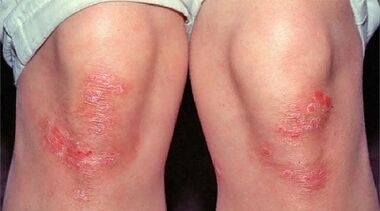
Typically, this disease causes the appearance of dry, red spots raised above the skin surface, but some people with psoriasis do not have visible skin lesions.These spots, called psoriatic plaques, in most cases first form on places that are subject to pressure and friction - the buttocks, the surface of the knees and elbows.
Psoriasis is a chronic disease, usually characterized by an undulating course.The patient may have both periods of improvement and remission (caused by therapeutic methods or unexpected), and periods of exacerbations or relapses (most often provoked by unfavorable external factors - stress, alcohol consumption).
The severity of the disease in different patients, or even in one patient during periods of exacerbation and remission, can vary widely - from local small damage to complete coverage of the body with psoriatic plaques.
Causes
Doctors have not been able to compile a list of the exact causes of psoriasis.Reasons depending on the nature:
- Viral.Viruses that negatively affect the functioning of lymph nodes.It is extremely problematic to identify these microorganisms and determine their habitat.It is noteworthy that the blood of a sick person after transfusion to a healthy patient does not infect.Therefore, this cause of psoriasis is considered unproven.
- Immune.A generally accepted reason.The trigger mechanism is a gene process in which the immune system is disrupted.An infectious disease, sore throat or sinusitis, can lead to psoriasis.
- Infectious.Initially, scientists were of the opinion that spirochetes, streptococci and even epidermophytons were to blame.The research results did not confirm this theory.New hypotheses indicate that the development of psoriasis is caused by infectious diseases, including tonsillitis and influenza.
- Genetic.We are talking about the inheritance of a predisposition to the disease.Clinical practice shows that many people experience manifestations of lichen planus; however, it is not always possible to trace the connection with hereditary predisposition.
Predisposing and provoking factors
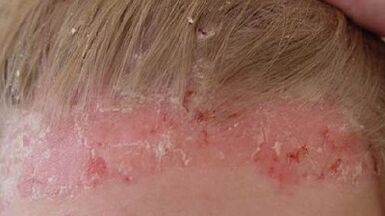
The key pathological manifestation of psoriasis is the excessive proliferation of defective epidermal cells.Therefore, the fundamental point in elucidating the mechanism of development of the disease and deciding how to treat psoriasis is to establish trigger factors.The main ones:
- Psychological - the influence of short-term severe stress, as well as unexpressed, but long-term or frequently repeated negative psychological effects, moral dissatisfaction, sleep disturbances, depressive states.
- Metabolic disorders in the body, dysfunction of the digestive organs, especially the liver and exocrine function of the pancreas.
- Disease or dysfunction of the endocrine glands.
- Immune system disorders (allergic reactions and immune diseases).
- The presence of chronic foci of infection in the body (tonsillitis, rhinosinusitis, otitis, and so on).Pathogenic and opportunistic microorganisms, especially Staphylococcus aureus, streptococci and yeast-like fungi, their toxins, skin cells damaged by these microorganisms, are powerful antigens that can provoke the immune system to aggression against them, altered and healthy cells of the body.
- Mechanical and chemical damage to the skin, long-term use of antibiotics or glucocorticoids for any diseases, hyperinsolation, smoking and alcohol abuse, acute infectious diseases.
Course of the disease
Psoriasis is a chronic disease, usually characterized by an undulating course, with periods of spontaneous or caused by certain therapeutic effects of remission or improvement and periods of spontaneous or provoked by adverse external influences (alcohol consumption, intercurrent infections, stress) relapses or exacerbations.The severity of the disease can vary in different patients and even in the same patient during periods of remission and exacerbation within a very wide range, from small local lesions to complete coverage of the entire body with psoriatic plaques.
What are the most common myths about the disease?
- Psoriasis is contagious.No, psoriasis is a chronic, non-infectious skin disease that is not transmitted from person to person and does not migrate from one part of the body to another.
- Climate affects the incidence and if you move to warm countries there will be no psoriasis.No, climate does not affect the prevalence of psoriasis.
- Psoriasis can be prevented.Factors that cause exacerbation are not the cause of the disease either by themselves or in various combinations.Today it is unknown what serves as the initial impetus for the development of psoriasis, and therefore it is impossible to take preventive measures.
- Psoriasis can be treated using so-called traditional medicine.Patients should be extremely careful when approaching such methods.
Severity
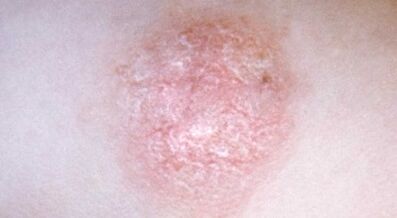
Psoriasis is usually classified by severity as mild (involving less than 3 percent of the skin surface), moderate (involving 3 to 10 percent of the skin surface), and severe (involving more than 10 percent of the skin surface).Psoriatic joint damage is regarded as a severe form of psoriasis, regardless of the area of skin damage.
There are several scales for assessing the severity of psoriasis.Assessment of the severity of the disease as a whole is based on an assessment of the following factors: the area of the lesion (the percentage of the body surface involved in the process), the degree of disease activity (the degree of redness, swelling, hyperemia of psoriatic plaques or pustules, the severity of skin itching, and so on), the patient’s response to previous treatment attempts, the impact of the disease on the general condition and daily life of the patient, on his social functioning.
Symptoms of psoriasis
In patients with psoriasis, due to the intensive growth of skin cells, dense areas appear on the skin, which are white, red or silver in color.In a healthy person, the development of skin cells occurs gradually, their exfoliation occurs approximately once a month.Consequently, new cells gradually move to replace old cells in the upper layer of the skin.
In patients with psoriasis, the development of new cells occurs much faster: they are formed not in a few weeks, but in a few days.Accordingly, during this time the upper skin cells do not have time to die, and as a result, the main symptoms of psoriasis manifest themselves - layering and the formation of plaques on the skin.Such plaques in patients with psoriasis vary in size.Their manifestation is observed on different parts of the body - on the scalp, knees, hands, elbows, and lower back.Symptoms of psoriasis most often occur in older people, but the disease can appear in children and adolescents.
The first symptoms of psoriasis can be noted at any age - both in a two-month-old child and in an elderly person.However, psoriasis most often occurs in people between the ages of twenty and forty.
It is customary to distinguish three stages in the course of psoriasis: progressive, stationary, regressive.
At the first, progressive stage, the papules have a brighter color, their swelling appears, and a pronounced erythematous-edematous spotted border is noticeable around the papules.Papules may be on the verge of merging, uniting into large common areas or into plaques with different outlines.Positive Kobner phenomenon often occurs at this stage of psoriasis.This condition is characterized by the appearance of papules in places that were previously subject to pressure and friction.In this case, even slight irritation to the skin is fraught with the appearance of papules.
During the period of regression, papular infiltration disappears completely over a large area of the patient’s body surface.Where there were previously rashes, foci of hyperpigmentation or areas of secondary leukoderma appear.At the same time, a distinct pale border appears around the psoriatic elements that regress.
Irritated psoriasis
It develops against the background of active exposure to certain irritants on the skin with existing progressive psoriasis, in particular sun rays or specific ointments, as well as other types of irritants affecting plaques.
Exudative psoriasis
This form of psoriasis is characterized by excessive exudate during the inflammatory reaction; it appears as part of the progressive period of psoriasis.
Guttate psoriasis
Guttate psoriasis, the symptoms of which appear suddenly, is characterized by the formation of multiple spots within the skin.
Patchy psoriasis
This form of the disease manifests itself in the form of mild infiltration from the elements of the rash.They, in turn, look like spots (not papules).Patchy psoriasis develops, as a rule, acutely, and it is also characterized by similarities with toxicerma.
Old psoriasis
This form of the disease can be considered in terms of symptoms in the form of pronounced infiltration from the plaques, their general cyanosis, with a hyperkeratotic or warty surface.This type of lesion is particularly difficult to cure.
Seborrheic psoriasis
This form of psoriasis, as its name suggests, develops in patients with seborrhea that is already relevant to them.The disease manifests itself on the scalp, in the area behind the ears, on the chest, in the area of the nasolabial folds, in the subscapular and scapular parts of the back.
Palmoplantar psoriasis
The disease can manifest itself either in the form of ordinary psoriatic plaques and papules, or in the form of hyperkeratotic formations simulating calluses and calluses.
Diagnostics
The process of diagnosing psoriasis does not present any particular difficulties and is based on studying the characteristic appearance of the patient’s skin.Laboratory tests or specific studies for psoriasis are not usually performed.However, in some cases with progressive severe psoriasis, a blood test is still necessary to identify inflammatory, autoimmune, and rheumatic processes.
A skin biopsy is also sometimes prescribed to differentiate psoriasis from other skin diseases.Another sign of psoriasis that a specialist pays attention to during the diagnostic process is the presence of pinpoint hemorrhages and the rapid manifestation of bleeding after scraping the plaque from the skin.
What psoriasis looks like: photos in the initial stage
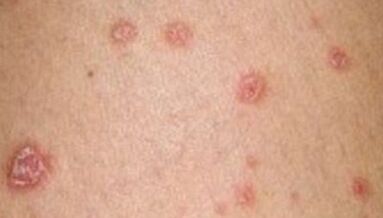
The primary element of psoriasis is a single pink or red papule, which is covered with a large number of loose silvery-white scales.
An important diagnostic sign is the triad of psoriasis: the phenomenon of stearin spots, terminal film and pinpoint bleeding when scraping off the scales.
Treatment of psoriasis at home
Psoriasis is a chronic disease.Its treatment involves initially using more gentle medications and methods, and later, based on observations of the development of the disease in the patient, it is possible to change the prescription.The goal of treatment is positive results so that skin rashes disappear and do not appear for as long as possible.In some cases, psoriasis does not require any treatment.
The question of how to treat psoriasis at home should be divided into 3 main categories: internal use of drugs, mainly medications, external use (ointments) and physiotherapy.Secondary ones are used more often as adjuncts in the treatment of psoriasis.
Regardless of what methods of treating psoriasis the dermatologist chooses, the maximum effect comes from an integrated approach to solving this problem, which involves:
- use of external means;
- internal use of medications, vitamins, dietary supplements;
- connection of physiotherapeutic procedures;
- treatment in sanatoriums with mineral waters, mud, leeches;
- prescription of diet, therapeutic fasting.
When prescribing treatment, a doctor must take into account a lot of data about the patient:
- complexity of the disease development,
- function of the digestive organs,
- metabolic disorders
- concomitant diseases,
- the functions of the nervous and endocrine systems are studied,
- environmental influences,
- heredity.
Medicines
There is a technique where the patient is first offered more gentle drugs with the fewest side effects.If they turn out to be ineffective, they are replaced with more potent ones, and so on.Even if the treatment suits the patient, it is changed after a while.The fact is that gradually the body gets used to the drug and its effect decreases.
Drug treatment of psoriasis includes taking various medications orally, using ointments and other remedies.
Taken orally:
- antihistamines;
- hepatoprotectors;
- enzymes;
- energy sorbents;
- antibiotics;
- NSAIDs;
- immunosuppressants;
- biological products.
Hormonal drugs are used for complex stages of the disease.Use only as prescribed by a doctor.In other cases, it is recommended to do without them.Since they are addictive, although they lead to a quick effect, but not for a long period.In addition, hormonal drugs have a lot of side effects.
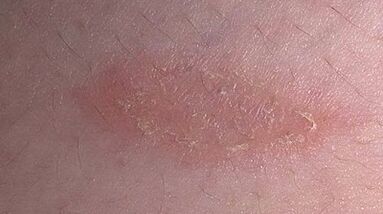
External therapy involves applying substances to the skin, such as:
- Retinoids are a type of group that come in the form of ointments;
- Creams with the main active ingredient – grease;
- Petroleum mixtures;
- Tar medicines;
- Keratolytic base preparations;
- Vitamin D3 complexes on a synthetic basis;
- Corticosteroids.
Ointments for psoriasis
In the case of a mild form of this pathology, it is sometimes possible to get rid of its symptoms through external means alone.A specialist will recommend a more suitable ointment for the treatment of psoriasis.
In the case of systemic treatment, constant monitoring by a specialist is required.This type of therapy involves the use of various injections and tablets.
Phytochemotherapy
Phytochemotherapy is one of the methods of treating psoriasis that involves the use of ultraviolet rays.This method is carried out using special installations that allow the exposure of ultraviolet rays not to the entire skin, but only to its affected areas.
PUVA therapy
This is the therapeutic effect of long-wave ultraviolet radiation in combination with special medications, which is used for the most severe forms of psoriasis that are difficult to respond to other treatment methods.The effectiveness of this method of treating psoriasis is enhanced by oral administration of special medications 2 hours before irradiation.
Innovative treatment methods - new in the treatment of psoriasis
Surgical treatment of psoriasis
It has long been proven that when diagnosed with skin psoriasis, treatment with external medications alone does not give the desired result.Surgeons perform a unique operation to restore the valve of the small intestine, which protects this part of the intestine from pathogenic bacteria.After the operation, the protective capabilities of the immune system are enhanced, the skin becomes healthier and long-term remission is observed.
Using narrowband UVB therapy with a wavelength of 311 nm
Recently, the use of this method as monotherapy has been practiced.Compared to other UV treatments, this method has minimal side effects, is well tolerated and is a short-acting technique - a few minutes per procedure, the course of treatment is 2.5 months.In such a short period of time, visible clinical improvement and long-term remission occurs for up to 2 years.
Diet for psoriasis
Patients with psoriasis simply must follow a diet and adhere to the basic principles of proper nutrition.The main task of the diet is to maintain a normal acid-base balance.But it is important to note that the alkaline background of the body should slightly prevail over the acidic one.
List of products that form alkali in the body:
- Any vegetables except rhubarb, pumpkin and Brussels sprouts.It is important to remember that potatoes, peppers, eggplants and tomatoes are strictly prohibited.
- Don't exclude fruits.The main thing is not to eat prunes, cranberries, currants and blueberries.It is worth noting that bananas, melon and apples should not be consumed at the same time as other foods.
- Be sure to drink fresh vegetable juices from carrots, beets, parsley, celery and spinach.
- You can consume fruit juices of grapes, pineapple, pear, orange, papaya and grapefruit, mango, lemon and apricot daily.It is important to add lecithin and lemon juice to your food.
List of foods that people with psoriasis should not eat (they form acid):
- The consumption of foods containing starch, fats, sugar and oils should be eliminated completely or reduced to a minimum.Typically, these include the following products: potatoes, beans, cream, cheese, grains, meat, dried peas.Unbalanced daily consumption of these products inevitably leads to the initiation of acid reactions in the blood.The result is a deterioration in health.
- It is important to properly balance food.There are a number of products whose consumption at the same time is prohibited.For example, meat products with products that contain a large amount of sugars, and you should not combine sweets and starch.
- It is important to limit your sugar intake.Preservatives, vinegar, dyes and various food additives should be included in the diet as little as possible.
- The main point is that it is necessary to completely eliminate the consumption of alcohol and alcohol-containing drinks.
Every psoriasis patient should remember that eating right is an important condition in the treatment of this disease.It is imperative to replace frying with stewing or boiling.It is necessary to consume foods that are subject to gentle processing.You should forget about fried and fatty foods.
Menu for a week for psoriasis
Let's look at a sample menu for a week, which is recommended for exacerbations, relapses and for prevention during dangerous periods.
1st day
- Breakfast: fresh cabbage salad, a slice of whole grain bread, green tea.
- Second breakfast: 2 hard-boiled eggs, toast, dried fruit compote.
- Lunch: cauliflower soup, whole grain bread, for the main course - buckwheat porridge with mushrooms or vegetables, green tea.
- Dinner: a little unsweetened cottage cheese with sour cream, kefir.
2nd day
- Breakfast: cucumber and tomato salad, apple, green tea.
- Second breakfast: a piece of black bread with butter, 1 hard-boiled egg, green tea.
- Lunch: cabbage soup without meat, a piece of black bread, green tea.
- Dinner: apple, glass of fermented baked milk.
3rd day
- Breakfast: fruit salad dressed with yogurt, gooseberry compote.
- Second breakfast: vegetable salad, a slice of whole grain bread, green tea.
- Lunch: boiled fish (pike perch, catfish) with a minimum amount of salt, a slice of whole grain bread, gooseberry compote.
- Dinner: yesterday's bun, gooseberry compote.
4th day
- Breakfast: cucumber and egg salad with sour cream, whole grain toast, apple juice.
- Second breakfast: 2 bananas, 1 glass of fermented baked milk or kefir.
- Lunch: a cup of broth, a piece of boiled meat, a salad of cucumbers and tomatoes.
- Dinner: a slice of whole grain bread with butter, a glass of kefir.
5th day
- Breakfast: carrot salad, whole grain toast, green tea.
- Second breakfast: boiled fish (not red).
- Lunch: river fish soup, a slice of whole grain bread, green tea.
- Dinner: yesterday's bun, a glass of kefir.
6th day
- Breakfast: oatmeal with water, a piece of bread with bran, green tea.
- Second breakfast: cottage cheese with fruits (bananas, apples, apricots), kefir.
- Lunch: pea soup without meat, a piece of bread (any kind), an apple.
- Dinner: a glass of kefir.
7th day
- Breakfast: buckwheat porridge with milk, kefir.Second breakfast: a sandwich with butter and a piece of boiled meat, apple juice.
- Lunch: soup with meatballs, green tea.Dinner: 2 apples.
Proper nutrition will help avoid frequent relapses.To select an individual diet, you need to contact a nutritionist.
Traditional methods of treating the disease
Cleansing the body with psoriasis is often carried out using folk remedies.For these purposes, various products of natural origin, as well as herbs, are used.
Prescription medications for oral use
To cleanse the skin and eliminate the main symptoms of psoriasis, the following recipes are recommended:
- Using flax seeds.To prepare the product, pour a tablespoon of seeds into a glass of boiling water and mix thoroughly.The product must infuse for at least 12 hours.It is better to leave the medicine overnight.Take the infusion in the morning on an empty stomach.
- Bay decoction.A decoction of bay leaves has a good effect.To do this, add 10-15 medium-sized leaves to a liter of boiling water and let the product simmer for 15-20 minutes over low heat.At the end, strain the broth and cool.Take 1 tbsp.l.three times a day for 20-30 days.
- Dill seeds.Plant seeds in the amount of 2 tbsp.l.pour a glass of boiling water and leave for 2-3 hours.Afterwards, the medicine should be strained and taken half a glass 2-3 times a day.
- Tincture of celandine herb.Celandine can be purchased at a pharmacy.To prepare the product 2 tbsp.l.the herbs are poured with 500 g of alcohol and left in a dark room for 10-12 days.Afterwards, the product must be filtered and taken 20 g three times a day.
Products for external use
To get rid of plaques and cleanse the skin, use the following recipes:
- Treatment of lesions with linseed oil.You can apply the oil 5-6 times a day.
- Ointment based on tar and propolis.To prepare, you need to take 50 g of tar and 30 g of propolis.The products must be heated in a water bath and mixed thoroughly.After cooling, apply the ointment to the plaques 3-4 times a day.
- Fish oil in its pure form cleanses the skin very well.It is applied to the affected areas in a thin layer and left for 30-40 minutes.
It is very important to follow a diet and other necessary preventive rules during treatment of the disease.Prevention and treatment with the help of properly selected products will help you get rid of the pathology for a long period.
Prevention
There is no specific prevention of psoriasis, but after the onset of the disease, it is necessary to take sedatives, conduct courses of vitamin therapy and correct diseases that provoke relapses.
What's the forecast?
The prognosis is conditionally unfavorable, since psoriasis is a chronic disease that cannot be completely cured.It progresses slowly, while timely and adequate treatment only improves the quality of life, but does not eliminate the disease itself.
During periods of exacerbation, loss of ability to work is observed.In the absence of adequate medical care, it can lead to disability.